
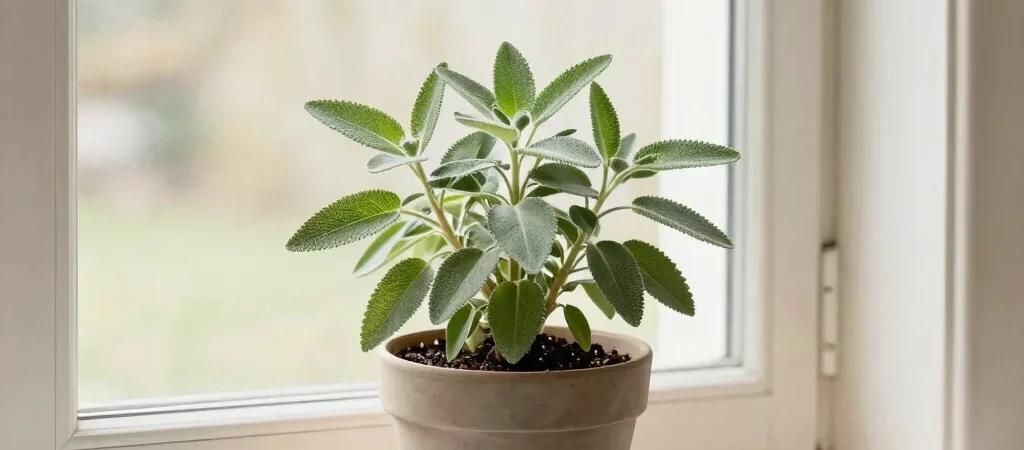
A potted sage plant often struggles for a simple reason: its roots stay wet for too long. This Mediterranean herb prefers a bright spot and soil that drains freely, so a sunny windowsill or outdoor step can work better than a sheltered, dim corner. Give it a little space, then let the plant set the pace.
Choose the Pot Carefully
Pick a pot with drainage holes and enough room for the root ball to grow; a saucer should catch runoff without leaving the base of the pot standing in water. A gritty potting mix or a mix amended for drainage can help avoid the dense, soggy conditions sage dislikes. Terracotta dries out faster than many glazed pots, which can be useful in a rainy or humid spot.
If you are moving a nursery plant into a new container, keep the top of its root ball close to the soil surface rather than burying the stems. Water it thoroughly after planting, let excess water drain away, and check the soil before watering again. The surface can dry before the soil farther down does.
Find Its Brightest Spot
Sage grows best with several hours of direct light, though the exact placement depends on your climate and the heat of the window or patio. In a hot summer afternoon, a plant in a small dark pot may dry too quickly; in a cool, cloudy setting, it may need the brightest available position. Watch the plant and the soil together instead of following a rigid watering schedule.
Rotate an indoor pot now and then if one side leans toward the window. Outdoors, bring a container into a more protected place if local winter conditions are colder than the variety can tolerate. A plant label or a regional growing guide can help you make that call.
Harvest Without Stripping It
Take a few leaves at a time from established stems, using clean scissors when you want a longer sprig. Avoid removing most of the plant’s foliage at once; leaves are how it gathers energy for new growth. Pinching a growing tip can encourage branching, but leave enough leafy growth for the plant to recover.
A sage pot is easiest to care for when it is close enough to notice: beside the kitchen door, on a sunny balcony, or near the window where you make tea. Check the soil, turn the pot toward the light, and harvest modestly. Those small habits make a more reliable routine than fussing over it every day.